Lisa Makeeva, Registered Dietitian Master of Applied Nutrition
Food sensitivities can be incredibly difficult to pinpoint and can manifest as various chronic health conditions.
MRT stands for mediator release testing - it is the most superior method for detecting food sensitivities, offered through Oxford Biomedical Lab. MRT measures changes in the ratio of liquids to solids after blood is exposed to various food substances. Sound confusing? Read on...
So picture this: you have a bunch of white blood cells floating around in your blood stream, and each white blood cell contains mediators such as histamine, prostaglandins, and cytokines. When you ingest a food particle (or food antigen) that is not agreeable with your immune system, your white blood cells release a bunch of mediators in order to put out the fire. The more inflammatory a given food is, the more mediators are needed to cool this fire, HENCE the greater the mediator release, the more your white blood cell shrinks in size, and the greater degree of sensitivity to that particular food.
So in a nutshell, this change in solid (white blood cell) to liquid (blood) ratio, is what is being measured through the MRT. The more you release these mediators in response to a food antigen, the greater your symptoms of headache, chronic fatigue, skin issue, diarrhea (the list goes on...) may manifest post-meal.
CONDITIONS WHERE ADVERSE FOOD REACTIONS MAY PLAY A ROLE:
Can test food AND chemical reactions such as caffeine, lecithin, and salicylic acid
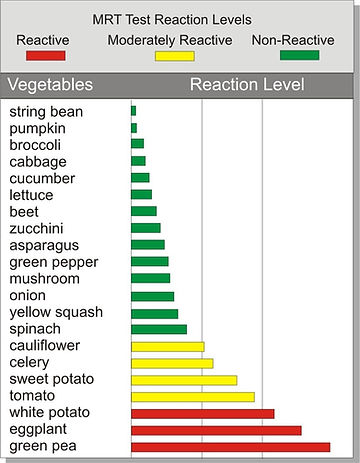
Quantifies MAGNITUDE of each reaction to guide dietary recommendations
Your results are based on your unique immune response
MRT tests for 29 different food chemicals AND 141 different foods
HOW THE TEST WORKS:
This is a blood test. You do not have to fast for this test. The lab doing the blood draw will likely charge a draw fee, payable at the time of service
I will order the MRT test kit straight to your home in 5-7 business days
Arrive at the lab in the morning before 12pm. This ensures the blood will be viable when Oxford lab receives it the following morning. It also ensures it will be ready for Fed Ex by their last pick-up time.
At the lab, find out if they will call Fed Ex to have your kit picked up, or if they have a daily pick up time.
The Instructions for the Phlebotomist tell them how to do the test and are on a card inside the kit.
Shipping the samples: Inside the kit is a prepaid Fed Ex overnight shipping bag. The lab should be willing to either:
Pack the kit up for you and call Fed Ex to ask for a special pick-up at the hospital OR They may tell you that Fed Ex has a specific time to pick all the samples each day, and they will add your kit to the other items waiting to go out.
If the lab isn’t able to ship for you, you will need to take it to Fed Ex yourself. Check locations ahead of time in case you have to drive there after your blood draw. In any case, the kit must be sent out the same day the blood is drawn and be received by the lab the following day.
Your results will be e-mailed to me within 5-7 business days. We will schedule a consultation and interpret what your results actually mean, including design of a protocol, meal plan, and recipes based on your specific results.
Still unsure whether the MRT is right for your condition? Book a free 15-minute discovery call.